
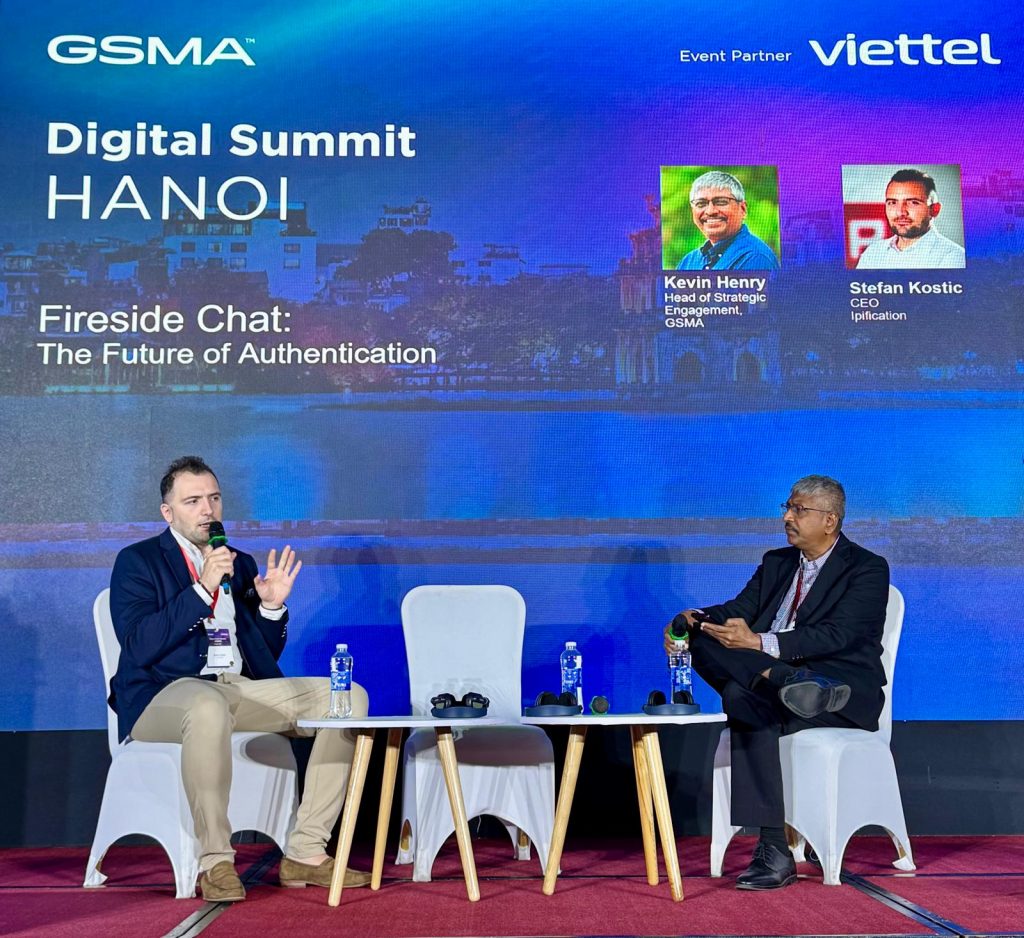
I’ve had the privilege to attend the 2025 GSMA Digital Nation Summit in Hanoi where I joined industry leaders to discuss the most urgent challenges businesses face today.
The talks revolved around how businesses must evolve their strategies to meet the rapidly changing expectations of today’s digital customers, but one theme emerged repeatedly: the importance of digital trust as a key enabler of business growth.
No longer a “nice to have”, user trust has all but become the invisible currency that determines whether users choose to interact, purchase and stay loyal to your brand or another one.
Globally, businesses have started to recognize this fact. 93% of US business executives agree that building and maintaining trust improves the bottom line.
Now, there are different directions a company could take to build user trust, but one area reigns king: cybersecurity. 79% of consumers list protecting their data, and 73% of consumers list a consistent and reliable customer experience as very important in earning their trust.
Yet, the path to earning and sustaining that trust remains fraught with challenges — from data breaches to tedious user experiences that frustrate rather than reassure.
But let’s start from the beginning.
The High Stakes of Digital Trust: Why Cybersecurity is More Than Just Risk Mitigation
Cybersecurity is one of the biggest competitive advantages you could have. In a world where cyberattacks are on the rise, businesses that prioritize strong security are better positioned to stand out and future-proof their operations.
However, cybersecurity is about more than just mitigating risks. As illustrated above, cybersecurity is also very much about building trust, and trust is the real game changer that directly affects your customer acquisition, retention, and engagement rates.
In fact, 57% of companies now see cybersecurity as a way to foster trust with their customers. When customers feel secure and trust your brand, they’re more likely to engage with your brand and become repeat buyers — fairly straightforward.
But where things get interesting is there’s a major trust gap, and that can negatively affect the prioritization in companies.
While 90% of business executives believe customers trust their companies, only 30% of consumers actually agree. That’s a massive disconnect, and it shows how far businesses still have to go in aligning their security efforts with customer expectations.
So, where did we go wrong?
Where Traditional Systems Fail: Why Seamless Authentication Matters
While designed to protect user data, traditional authentication methods often end up being more of a hindrance than a help.
Many of the most common solutions, such as passwords and SMS OTPs, are holding businesses back from building the seamless user experience that today’s customers expect. They don’t just add unnecessary friction, they often leave security gaps wide open.
Passwords are a prime example. With so many passwords to remember across various accounts, users inevitably take shortcuts.
This leads to them reusing passwords across different platforms, making it easier for attackers to gain access to multiple accounts with just one compromised password. What was originally a security measure has, over time, become a vulnerability.
SMS OTPs aren’t much better. While they’ve been widely adopted as an extra layer of protection, they come with a significant flaw: the SS7 vulnerability. Since SMS OTPs rely on the SS7 protocol, they are susceptible to interception and rerouting, making them an easy target for hackers.
What’s more, they are highly vulnerable to phishing attacks and SIM swapping, risks that are only growing as the technology evolves. Phishing, in particular, has skyrocketed since the introduction of generative AI.
In fact, phishing attacks have surged by an astonishing 4,151% since ChatGPT was launched.
This leaves businesses exposed not only to cybersecurity risks but also to customer frustration. Today’s consumers expect a smooth, secure experience from start to finish.
70% of users say they prefer an authentication method simply because it’s easier to use, and 95% of multi-factor authentication users prefer mobile apps for their convenience.
Authentication should never be a roadblock in the customer journey but an integral part of a seamless process. When trust is embedded into every interaction — from sign-up to checkout — users are more likely to feel confident and loyal to your brand.
Protection to Trust: How IPification Drives Customer Loyalty
In this day and age, businesses shouldn’t have to choose between security and a smooth user experience. Not when they can have both.
Users expect security to be seamless, and businesses need to meet those expectations to build trust. IPification is designed to do just that, providing robust security without sacrificing the user experience.
So, how does it work?
IPification verifies users against their unique Mobile ID key, which consists of data from the SIM card, device, and network. All the user has to do is tap once to send the authentication request.
This passwordless approach eliminates the risks associated with phishing and stolen credentials. The authentication process takes just one millisecond to complete, and it can even happen seamlessly in the background, intermittently, without interrupting the user’s experience.
By offering a fast, frictionless, and secure way for users to authenticate, IPification meets today’s customers’ expectations, ensuring that businesses don’t just protect their data, but also build customer trust and loyalty.
When security becomes a seamless part of the user journey, it naturally fosters a deeper connection with your brand. And when trust is built into every interaction, loyalty follows.
Learn more about how IPification helps brands build trust with increased security and without friction.